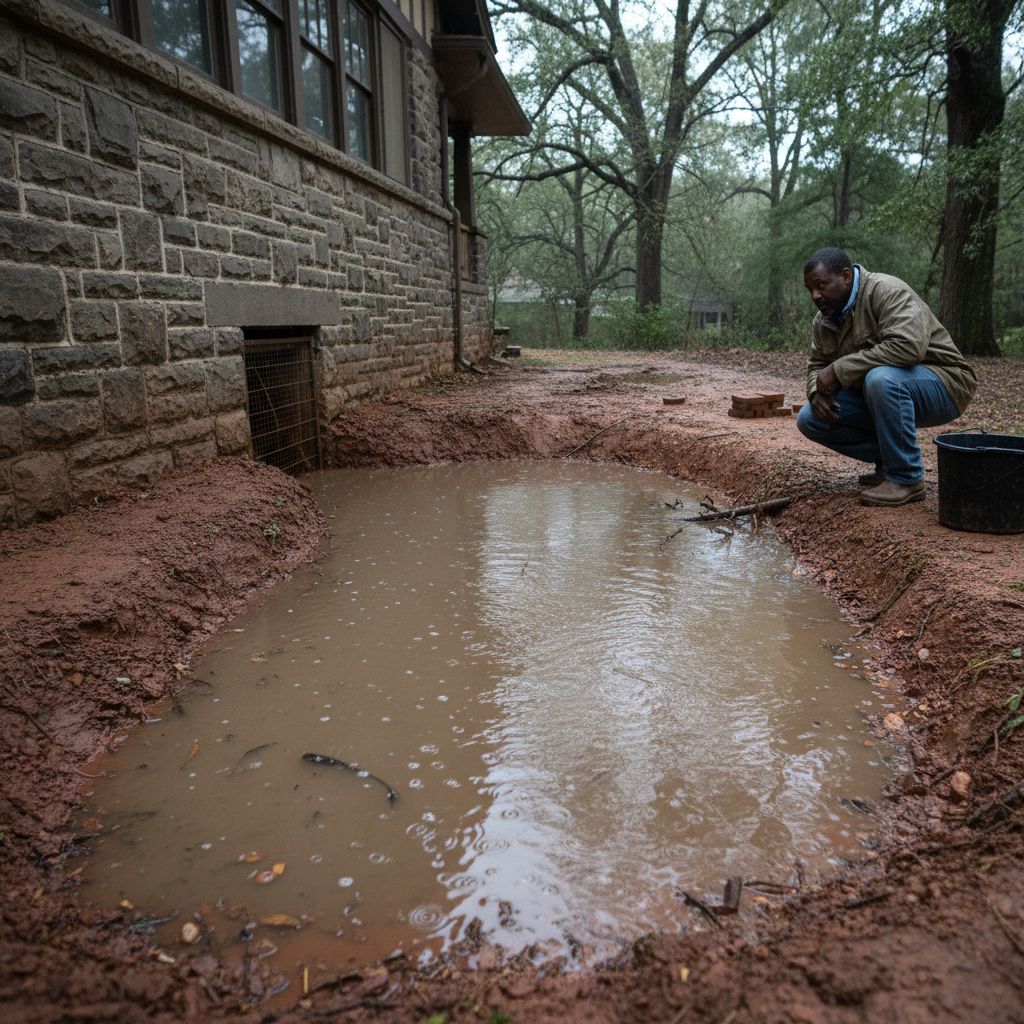
You know that feeling when you walk outside after a good, solid rain? That fresh, clean smell? It’s usually pretty great. But then, you glance over at your house and see it – a little (or a lot) of water just hanging out around your foundation. If you’re living in the Charlotte area, and you’re seeing crawl space water pooling around your foundation, Charlotte’s infamous clay soil is probably the biggest culprit. And honestly, it’s a bigger deal than you might think.
I mean, nobody wants a moat around their house, right? Especially not one that can cause real headaches down the line. We’re talking about everything from foundation issues to unwanted guests in your crawl space, like mold. And trust me, getting rid of mold is not anyone’s idea of a fun weekend project in April.
Why Charlotte’s Clay Soil is Such a Problem
Let’s be real for a second. Charlotte is beautiful, but our soil? It’s a different story. It’s mostly dense clay. Now, clay soil has a few quirks that make it particularly challenging for homes. Here’s the deal:
- It Expands and Contracts: When clay gets wet, it soaks up water like a sponge and swells. When it dries out, it shrinks. This constant swelling and shrinking puts immense pressure on your foundation, almost like a slow-motion push and pull.
- Poor Drainage: Clay is super dense, which means water doesn’t drain through it easily. Instead, it tends to sit on top or just below the surface, right where it can seep into your crawl space or put hydrostatic pressure on your foundation walls.
- It Holds Water: Because it doesn’t drain well, that water just lingers. And if you have any slight slope towards your house (which happens more often than you’d think), that standing water has nowhere to go but down, right into your foundation and crawl space.
What I didn’t expect when I first moved here was just how much rain we actually get. You’d think the water would just sink in, but with clay, it just sits there, patiently waiting for a crack or a weak spot to exploit. (I actually saw this happen to a neighbor’s place near Mint Hill once, it was a mess.)
What You Can Do About It
So, you’ve got this heavy clay soil, and water is pooling up. What’s a homeowner to do? Don’t worry, there are definitely steps you can take to protect your home. It’s not about fighting nature, but working with it.
- Check Your Gutters and Downspouts: This is step one, always. Make sure your gutters are clean and free of debris. Then, ensure your downspouts extend at least 5-10 feet away from your foundation. You want that rainwater directed far, far away.
- Improve Yard Grading: Take a look at the ground around your house. Does it slope away from your foundation? Ideally, you want a gentle slope (about 6 inches over 10 feet) to encourage water to flow away, not towards, your home.
- Consider French Drains: These underground trenches with perforated pipes can effectively collect excess groundwater and divert it away from your foundation. They’re a really smart solution for managing persistent pooling issues.
- Look Into Crawl Space Encapsulation: This is a big one, especially in our climate. Encapsulating your crawl space creates a barrier against moisture and outside elements, essentially sealing off that vulnerable area under your home. It’s a game-changer for humidity and water intrusion.
A Real-Life Moment
A while back, I was chatting with a guy named Tom in Spartanburg, SC. He’d been seeing consistent water pooling around his foundation for months, especially after those afternoon thunderstorms we get. He figured it was just “Carolina weather.” But then he started noticing a damp, musty smell in his house, and his energy bills were creeping up. Turns out, all that water outside had found its way into his crawl space, leading to serious moisture issues. Tom called Charlotte Crawlspace Solutions, and they walked him through his options. They installed a perimeter drainage system and encapsulated his crawl space. Within weeks, the pooling was gone, the smell vanished, and his energy bills actually started to drop. It was a real relief for him, seeing that problem finally handled.
Here’s the Big Takeaway
Don’t ignore that water! That crawl space water pooling around your foundation in Charlotte’s clay soil isn’t just an eyesore; it’s a warning sign. Protecting your home from moisture is one of the best investments you can make for its long-term health and your peace of mind. If this feels like a lot, or you’re not sure where to start, don’t try to tackle it all yourself. Why not give Charlotte Crawlspace Solutions a call? They can come out, take a look, and give you some honest advice on how to keep your home dry and happy. You don’t have to live with a soggy problem underfoot.