You know that feeling on a cold December morning in Charlotte? You swing your feet out of bed, and the second they hit the floor, you get that icy shock that wakes you up faster than coffee. For years, I just assumed that was a normal part of living in a house with a crawl space. Just throw on some slippers and deal with it, right?
But here’s the thing—it’s not normal. That chill you feel is a huge sign that your home is losing a ton of heat right through the floor. It all comes down to what’s happening (or not happening) in your crawl space. When people think about insulation down there, they usually picture one thing: those pink, fluffy fiberglass batts. But there are a few different crawl space floor insulation types for Charlotte homes, and picking the wrong one can cause more problems than it solves.
Why Your Floors Feel Like an Ice Rink
Let’s get nerdy for just a second. Your house naturally breathes. Warm air rises and escapes through the attic, and to replace it, your house sucks in air from the lowest point—the crawl space. This is called the “stack effect.”
So, if your crawl space is cold, damp, and musty (which many are around here), that’s the air you’re pulling up into your living room. And if the insulation is failing, there’s nothing to stop that cold from seeping right through your floorboards. It makes your furnace work overtime and your feet stay permanently cold from November to March.
A Closer Look at the Insulation Options
When you’re looking to fix this, you generally have three main choices. And honestly, they are not created equal, especially with North Carolina’s humidity.
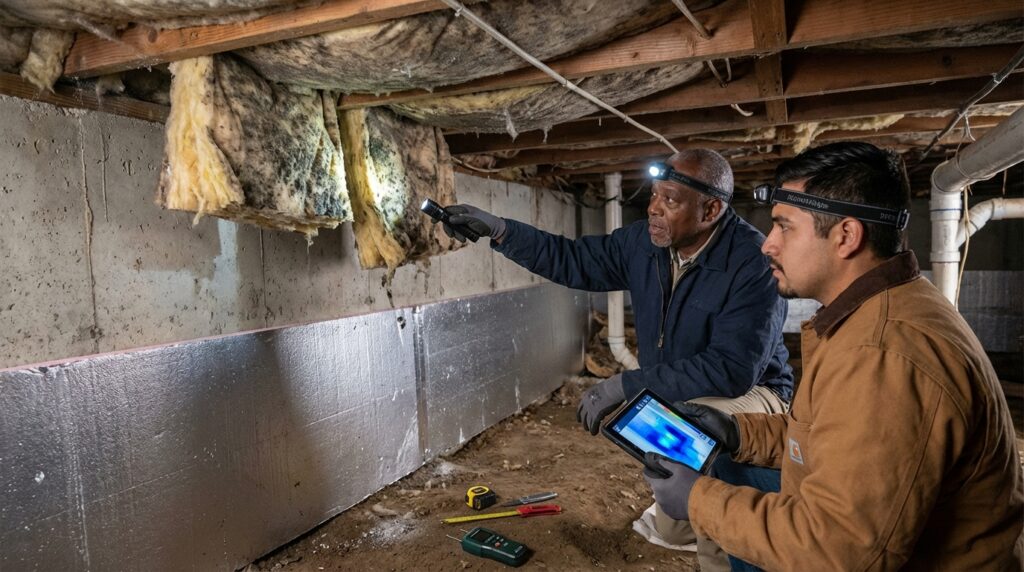
- Fiberglass Batts: This is the classic, old-school method. It’s cheap, and it’s what you’ll find in most older homes. The problem? Fiberglass is like a sponge. In a damp crawl space, it soaks up moisture, gets heavy, and sags away from the subfloor, becoming completely useless. Worse yet, that wet insulation becomes a perfect home for mold.
- Rigid Foam Board: This is a much better step up. These are big, solid panels of foam insulation that don’t absorb water. Instead of being jammed between the floor joists, they are typically installed against the foundation walls as part of a crawl space encapsulation. This helps seal off the vents and insulate the entire space from the cold earth and outside air.
- Spray Foam Insulation: This is the top-tier solution. A professional crew applies a liquid foam that expands to fill every single crack and gap, creating a perfect, seamless air barrier. Closed-cell spray foam is waterproof, so it doesn’t just insulate; it also acts as a moisture barrier. It’s an absolute game-changer for stopping drafts and moisture.
So, What Are the Best Crawl Space Floor Insulation Types for Charlotte Homes?
If I’m being real, for our climate, fiberglass insulation under the floor is a band-aid that’s destined to fall off. I’ve seen it happen too many times. You’ll be paying to have it replaced again in a few years.
The best long-term solution is to treat the crawl space as a whole system. That means using either rigid foam board on the walls or closed-cell spray foam as part of an encapsulation. This approach stops the cold, damp air from ever getting into the crawl space in the first place. Your floors stay warmer, your air quality improves, and your energy bills actually go down. It tackles the root of the problem, not just the symptom.
A Quick Story from a Home in Dilworth
A while back, we got a call from a homeowner named Sarah in Dilworth. She was fed up with her cold floors and a musty smell she couldn’t get rid of. She’d found us after searching for crawl space repair near me in Charlotte.
When our team at Greenserve went out to do a crawl space inspection in Charlotte NC, we found exactly what we expected. The old fiberglass insulation was hanging down in big, damp clumps, and some of it was covered in mold. After showing Sarah the photos, she understood immediately. We removed all the gross, failing insulation, treated the mold, and installed SilverGlo™ foam board insulation on the foundation walls as part of a full encapsulation. A few weeks later, she emailed us just to say it was the first winter she could walk around barefoot in her own home. That’s a huge win.
What’s the Next Step?
If you’re tired of wearing three pairs of socks inside, it might be time to think about what’s under your feet. The right insulation does more than just keep you warm; it protects your home’s structure and the air you breathe.
You don’t have to figure it all out on your own. If this sounds like your house, a great first step is just to get a professional opinion. Give our team at Greenserve a call, and we can take a look for you. It’s amazing what a difference a dry, properly insulated crawl space can make.