Let’s Step Back for a Second
A few weeks ago I was talking with a homeowner in south Charlotte, right off Providence Road. We were sitting at his kitchen table, coffee between us, and he said, “I’ve lived here 14 years and I’ve never been in my crawl space. Not once. Is that… bad?”
If you felt a little called out just now, you’re in good company. Most
folks don’t think about the space under the house until:
- There’s a musty smell they can’t get rid of
- The hardwoods start cupping
- A pest guy says, “Uh… you might wanna take a look under there”
- Or a buyer’s crawl space inspection in Charlotte NC blows up a sale
So let’s fix that. What you really need is a simple
annual crawl space maintenance checklist Charlotte NC
homeowners can actually follow without a bunch of technical junk.
Why This Little Space Matters More Than You Think
Here’s the truth: your crawl space is kind of like your home’s sinuses.
When it’s clear and dry, everything “breathes” better. When it’s wet,
moldy, or full of junk, your whole house feels it.
You might notice:
- That damp, basement-y smell (even if you don’t have a basement)
- Higher power bills because your system’s fighting humidity
- Cold floors in winter and sticky floors in summer
- Allergies or breathing issues that seem worse at home
And in Charlotte, with our humidity and summer storms, ignoring the crawl
space for years can turn into expensive
crawl space repair near me Charlotte searches real fast.
I don’t know everything, but I’ve seen enough ugly crawl spaces in places
like Ballantyne, Huntersville, and even up toward Lake Norman to know:
a little yearly attention beats a big “oh no” repair later.
Let’s Make This Simple: Your Annual Crawl Space Checklist
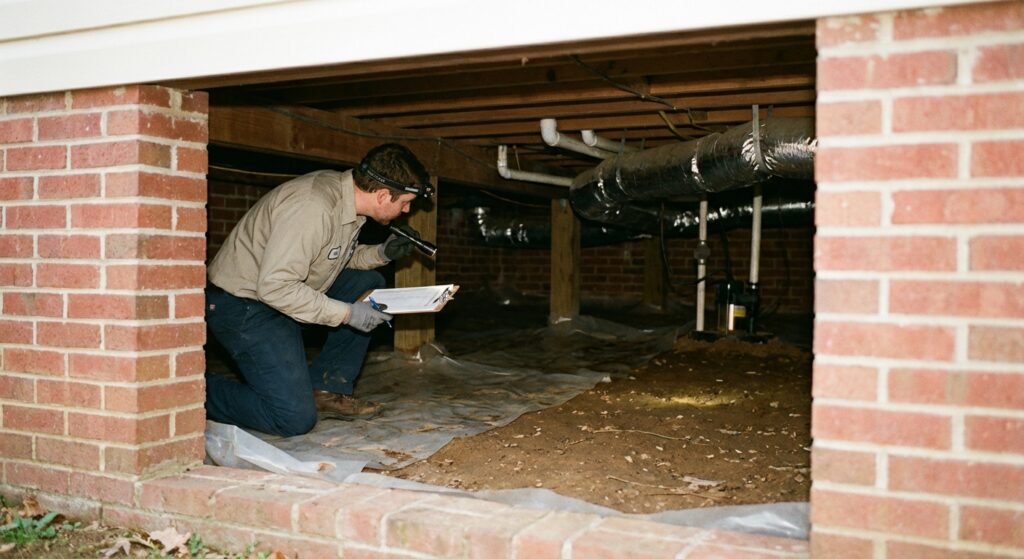
You can do a lot of this yourself, especially if you’re comfortable
squeezing into tight spaces. If not, you can at least use this to have a
smarter conversation when you schedule a
crawl space inspection Charlotte NC with a pro.
1. Safety First (Seriously, Don’t Skip This)
- Wear a mask or respirator (N95 at minimum)
- Use gloves and knee pads
- Bring a bright flashlight or headlamp
- Tell someone you’re going under the house (not kidding)
- Watch for nails, low pipes, and critters
2. Quick Outside Walk-Through
Before you even open the crawl space door, walk around the house and look for:
- Gutters and downspouts – Are they clogged or dumping water near the foundation?
- Grading – Is the yard sloped toward the house instead of away?
- Standing water – Any soggy spots right up against the foundation?
If water’s being directed toward your house, no crawl space fix will last
very long. Water always wins.
3. The Entrance and Access Door
- Is the door solid and tight, or rotting and loose?
- Any gaps big enough for mice or snakes? (Fun, I know.)
- Is there a simple weatherstrip or foam seal around the edges?
A cheap, poorly sealed crawl door is like leaving a window open all year.
4. Look for Water and Moisture
This is the big one. Once you’re inside, slowly look around for:
- Standing water – puddles, muddy spots, or obvious wet soil
- Water tracks on foundation walls – dark streaks or lines
- Condensation on ductwork or pipes – “sweating” metal
- Rust on metal supports or hangers
A little damp soil after a huge storm isn’t the end of the world. Regular
puddles or inches of water? That’s a sign you’ll want a pro to take a look.
5. Check the Vapor Barrier
If you already have plastic on the ground, that’s your vapor barrier. In
North Carolina, a good one makes a big difference.
- Is it thick and solid, or thin and crunchy?
- Are there big gaps where you can see bare dirt?
- Is it taped at the seams and up the piers?
- Is it torn, bunched up, or pushed aside?
A lot of older homes have a flimsy plastic that was tossed down years ago
and forgotten. Upgrading to the best vapor barrier for crawl space NC
conditions (thicker, taped, and sealed) is usually part of a bigger repair plan,
but this yearly check tells you how bad it’s getting.
6. Joists, Beams, and Subfloor
Grab that flashlight and look at the wood over your head:
- Do you see dark stains or fuzzy growth (mold) on joists?
- Does any wood look soft, crumbly, or rotten?
- Notice any sagging beams or sloped areas?
- Is the subfloor under bathrooms or kitchens stained from leaks above?
If you can press a screwdriver into wood easily, that’s not good. That’s
the kind of thing that turns into structural repair if it sits there for a few more years.
7. Insulation Check
In most Charlotte-area crawl spaces, you’ll see insulation between the floor joists. Look for:
- Insulation hanging down or on the ground
- Dark, dirty streaks (can show air leaks or past moisture)
- Obvious wet or moldy batts
If insulation is falling everywhere, it’s usually a sign of moisture or
pests, not just “time.”
8. HVAC Ducts and Plumbing
Take a minute to look at the mechanical stuff:
- Any air leaks where ducts are disconnected or loose?
- Condensation dripping off ducts or lines?
- Plumbing joints with slow drips or mineral buildup?
- Rusty metal straps or hangers?
A small drip under a bathroom can do a lot of damage over a couple of
years. This is your chance to catch it early.
9. Pests and Critters
Nobody likes this part, but it matters.
- Look for droppings along the edges
- Chewed insulation or plastic
- Nests made of paper, leaves, or insulation
- Spider webs everywhere (not a crisis, but a clue)
If you’re seeing a lot of activity, it might be time to seal gaps and talk
to a pest control pro.
10. Take Photos and Notes
This is the part most people skip, but it’s huge for long-term peace of mind.
- Snap photos of anything that looks “off”
- Note where it is (front left corner, under kitchen, etc.)
- Write down the date of your check
Next year, you’ll be able to see what’s changed, what’s spreading, and what
stayed the same.
A Real-Life Moment from Right Here in the Carolinas
Earlier this year, I met a homeowner in Greenville, SC at a little taco spot
downtown. He’d just spent close to $9,000 on crawl space repairs. When we
talked through it, here’s what hit me: most of his issues started as tiny
things 7–8 years ago.
His story went kind of like this:
- Year 1–3: A little musty smell in summer. Ignored.
- Year 4–5: Some cupping in hardwood floors. Blamed the flooring.
- Year 6–7: Buyer’s home inspector found high moisture and mold under the house.
- Year 8: Full cleanup, new vapor barrier, sump pump, wood repairs.
If he’d had a simple checklist and used it once a year, he probably could’ve
caught it when a few hundred dollars of fixes would’ve done the trick. That’s the part that stings.
The Part No One Talks About
Something I keep seeing with folks from Charlotte to Concord to Gastonia:
they wait to look under the house until they’re forced to. Usually by a
home sale, a bad smell, or a contractor’s bad news.
Real talk: scheduling a regular crawl space inspection Charlotte NC
every year or two is not overkill. It’s just smart. Especially if:
- You’ve had water under the house before
- Your crawl space has never been encapsulated
- Your home is more than 15–20 years old
- There’s a thin, torn vapor barrier or none at all
And no, you don’t have to do everything at once. You can phase things:
fix drainage, then upgrade plastic, then think about dehumidification, etc.
(One step at a time saves a lot of stress.)
What You Can Do Next
Here’s how I’d keep it simple if you live in or around Charlotte:
- Pick one month each year – Maybe April, before the
humidity really kicks in. Put “crawl space check” on your calendar. - Use this annual crawl space maintenance checklist Charlotte NC homeowners can follow – Walk the outside, peek inside, take a few photos.
- Call a pro if you see:
- Standing water or mud lines
- Soft or rotten wood
- Heavy mold or insulation falling everywhere
- Ask about a long-term plan – If needed, talk through
better drainage, the right plastic, and maybe encapsulation instead of
patch fixes every few years.
If You Only Remember One Thing…
Don’t wait for a crisis under your house. A 20–30 minute check once a year
and, when needed, a solid crawl space repair near me Charlotte
visit can save you thousands and a whole lot of stress.
Use this checklist, trust your nose and eyes, and if something feels off,
get it checked. Your floors, your air, and honestly your wallet will thank
you later.
And if this all feels like a lot right now, just start with one thing:
pick a date in the next month, grab a flashlight, and take that first peek
under the house. The rest can come after.